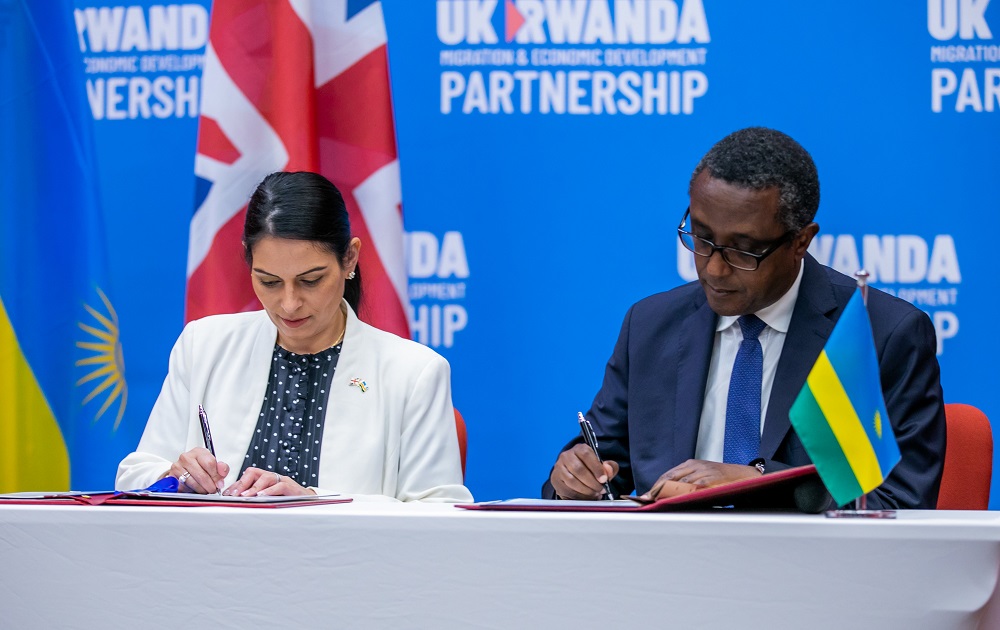
Rwanda and the United Kingdom will face off on March 18, 2026, at the Permanent Court of Arbitration (PCA) in the Netherlands, as Kigali seeks more than £50 million in compensation over the UK’s cancelled migration partnership.
The Rwandan government confirmed that the long-anticipated arbitration hearing will bring together legal teams from both countries in what is shaping up to be a high-stakes international legal battle.
The dispute stems from a migration and economic development agreement signed in April 2022, under which the UK planned to relocate undocumented migrants to Rwanda. The deal was also framed as a broader partnership supporting Rwanda’s development ambitions.
However, shortly after taking office in July 2024, British Prime Minister Keir Starmer scrapped the arrangement, arguing that it would not effectively deter irregular migration, particularly Channel crossings by small boats.
Kigali condemned the move, insisting the decision was taken unilaterally and outside the agreed legal framework. Rwandan officials argue that the UK’s withdrawal breached binding obligations under international law.
The UK government has maintained that it had already paid Rwanda £290 million to support preparations for receiving migrants—who were expected to number in the thousands—by the time the agreement was terminated.
According to reports, the arbitration proceedings will be open to the public, allowing observers to follow the case either in person or virtually.
British broadcaster GB News reported that Rwanda will be represented by barrister Verdirame KC of Twenty Essex, while the UK’s legal team will be led by Ben Juratowitch.
The compensation sought by Rwanda reportedly covers financial commitments it says remained outstanding up to April 2025.
Speaking to The New Times, Michael Butera, Technical Adviser to the Minister of Justice, said Rwanda’s case centres on the principle that international agreements must be honoured in good faith.
He noted that while states have the right to terminate treaties, such termination does not nullify obligations that had already arisen while the agreement was in force.
“Under international law, ending a treaty governs future relations but does not erase responsibilities that accrued during its validity,” he explained.
Rwanda says it initially pursued diplomatic engagement to resolve the dispute before opting for arbitration after those efforts failed.
The March hearing is expected to clarify the legal rights and obligations of both governments under the now-defunct agreement—setting a significant precedent for how international migration partnerships are enforced.