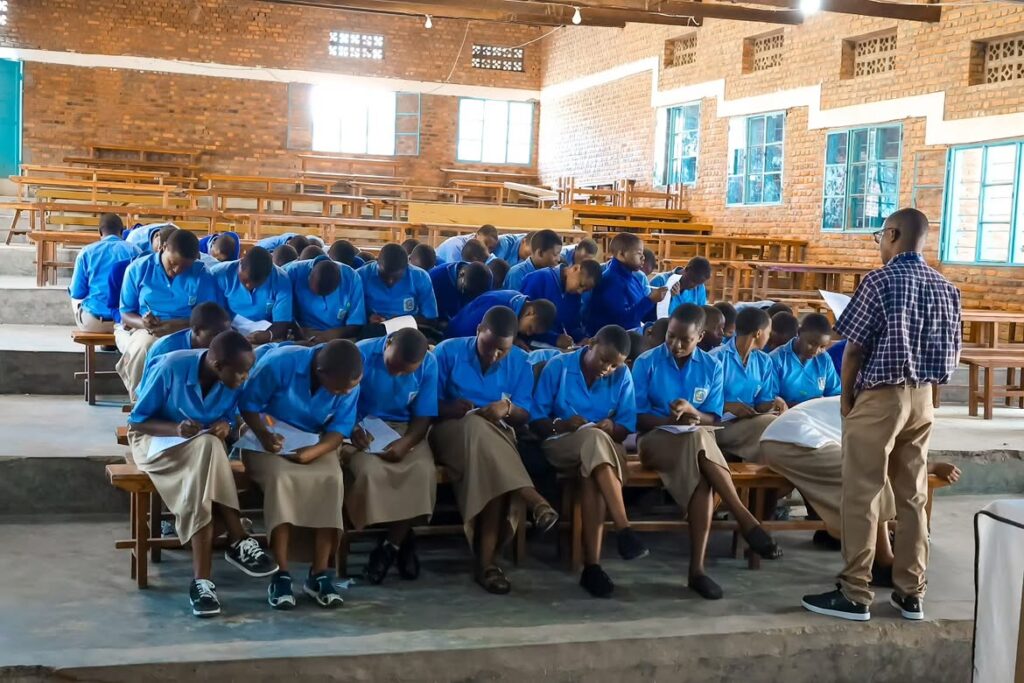
The education gap among Rwandan women is narrowing, with younger generations recording significantly higher school attendance and completion rates compared to older women, according to the 2025 Rwanda Demographic and Health Survey (RDHS).
The survey by the National Institute of Statistics of Rwanda (NISR), released on June 30, 2026, shows that only a small proportion of young women have never attended school, reflecting progress in expanding access to education for girls.
Among women aged 25–29, only 3% had never attended school, while 15.3% had completed secondary education and 7.6% had attained higher education. For those aged 20–24, 1.4% had never attended school, 14.8% completed secondary education, and 5.3% reached higher education.
The figures contrast sharply with older generations, where barriers to education were more widespread. Among women aged 55 and above, 47.7% had never attended school. The rate rose to 59% among women aged 65 and above.
The survey, which covered 24,961 women across Rwanda, found that education opportunities remain influenced by place of residence and household income.
In urban areas, 7.4% of women surveyed had never attended school, compared with 15.2% in rural areas. Urban women also recorded higher completion rates, with 10.9% reaching secondary education and 8% attaining higher education, compared with 3.3% and 0.9% respectively among rural women.
Economic status also plays a major role in access to education. Among women from the poorest households, 22.8% had never attended school, while only 0.4% completed secondary education and none reached higher education.
By comparison, among women from the wealthiest households, only 4.5% had never attended school, while 15.3% completed secondary education and 12.5% attained higher education.
Overall, RDHS 2025 found that 13% of surveyed women had never attended school, while 5.4% completed secondary education and 2.9% attained higher education.
The findings highlight Rwanda’s progress in girls’ education while pointing to continued challenges in reducing inequalities linked to rural residence and household economic conditions.