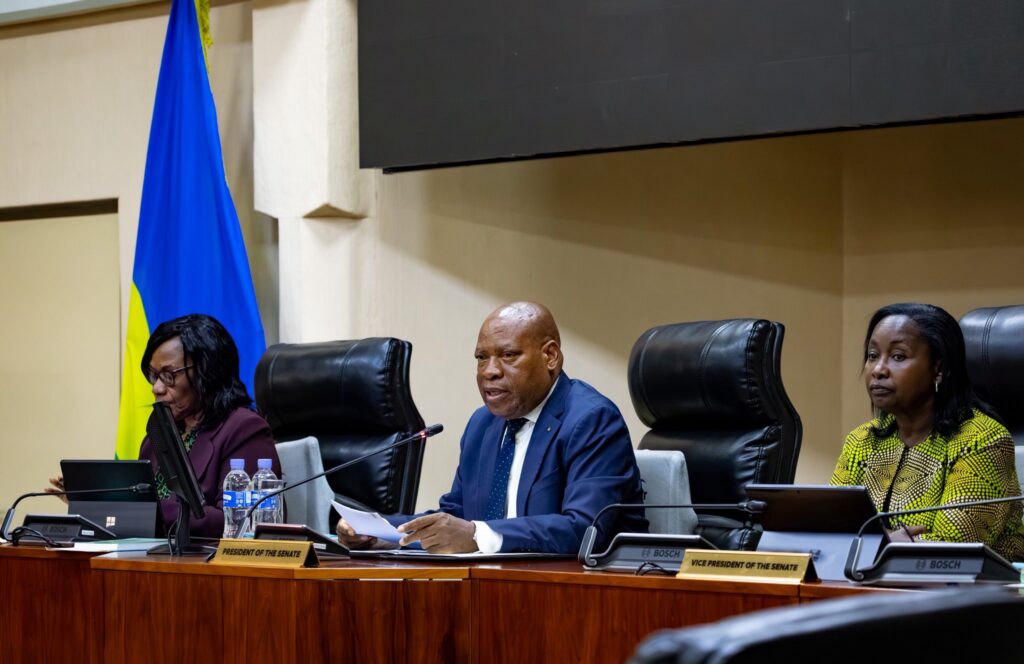
Rwanda’s Senate has summoned the Prime Minister to provide explanations on persistent challenges affecting industrial parks, as lawmakers seek solutions to bottlenecks they say could slow the country’s industrial development ambitions.
The decision follows the approval of a report by the Senate Committee on Economy and Finance, which assessed the progress and challenges in developing industrial parks across the country.
The report acknowledged progress made, including the preparation of master plans and the development of basic infrastructure in some industrial zones. However, senators said several issues remain unresolved and require urgent government intervention.
Key concerns raised include inadequate supporting infrastructure, limited planning studies before establishing industrial parks, and challenges in selecting land for industrial development without affecting residential areas, agriculture and other economic activities.
Senator Nsengiyumva Fulgence, Chairperson of the Committee on Economy and Finance, said some industrial parks still lack essential services needed to support investors and employees.
“Some industrial parks still lack facilities such as places where workers can get meals, health services, accommodation and reliable transport systems,” he said, adding that factories employing large numbers of people face difficulties when workers need basic services.
Senator Nkubana Alphonse also highlighted electricity supply challenges, noting that unreliable power affects factory operations and can lead to losses for investors when production is interrupted.
Senate President Dr. Kalinda François Xavier said the concerns raised in the report should receive solutions to ensure industrial development supports the objectives of the second National Strategy for Transformation (NST2), under which Rwanda aims to increase industrial output by 10% annually.
Rwanda currently has 11 industrial parks covering 1,659 hectares, with more than 1,500 plots designated for factories. So far, 303 factories have been established and are operational.