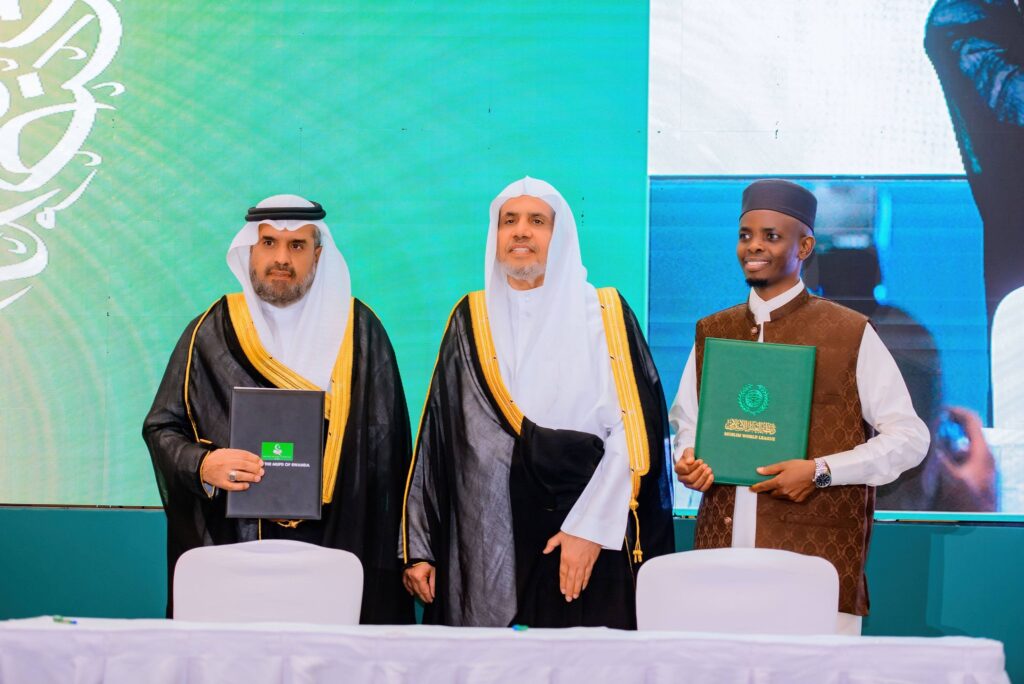
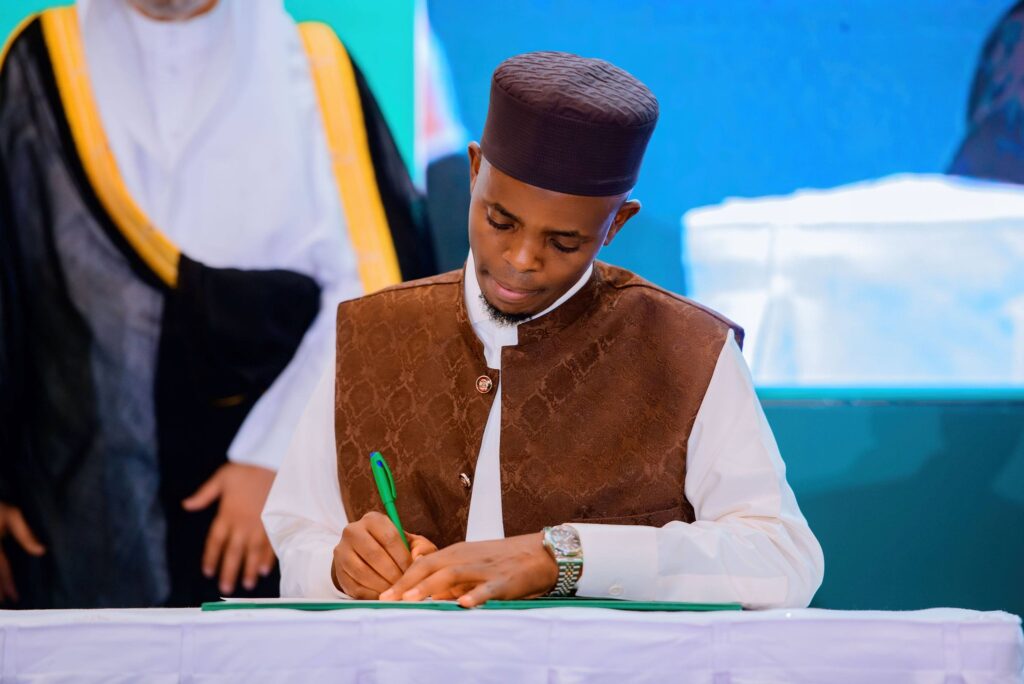
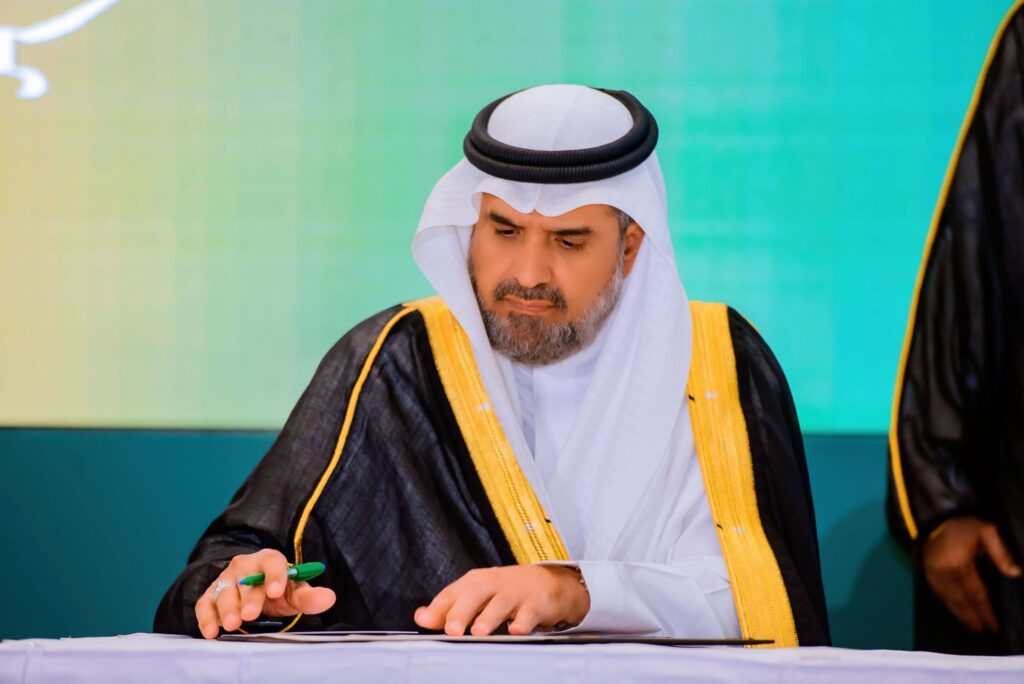
The Muslim World League (MWL) has signed a landmark partnership with the Muslim Community in Rwanda to support Islamic initiatives in Rwanda, including the construction of modern mosques and the launch of international Qur’an competitions.
The agreement was formalized during the first official visit of MWL Secretary-General and President of the International Union of Muslim Scholars, Sheikh Dr. Muhammed bin Abdulkarim Al-Issa, who arrived in Rwanda on Wednesday, February 18, 2026.
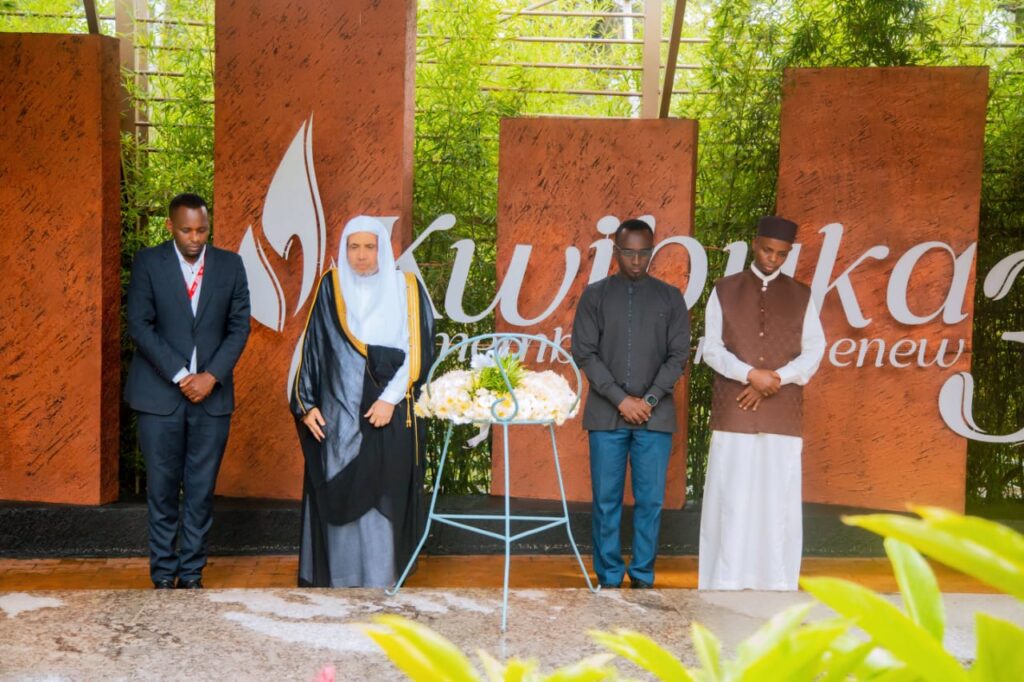
On Thursday, Sheikh Dr. Muhammed visited the Kigali Genocide Memorial at Gisozi, where he was briefed on Rwanda’s history and the 1994 Genocide against the Tutsi. He also laid a wreath to honor the victims, underscoring MWL’s commitment to reconciliation and remembrance.
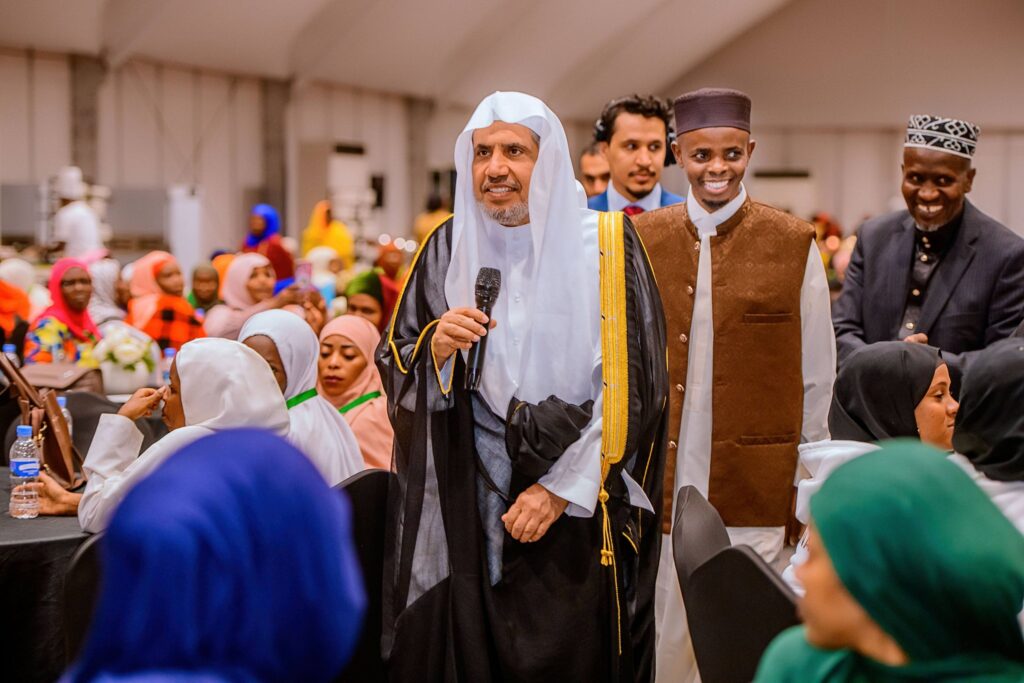
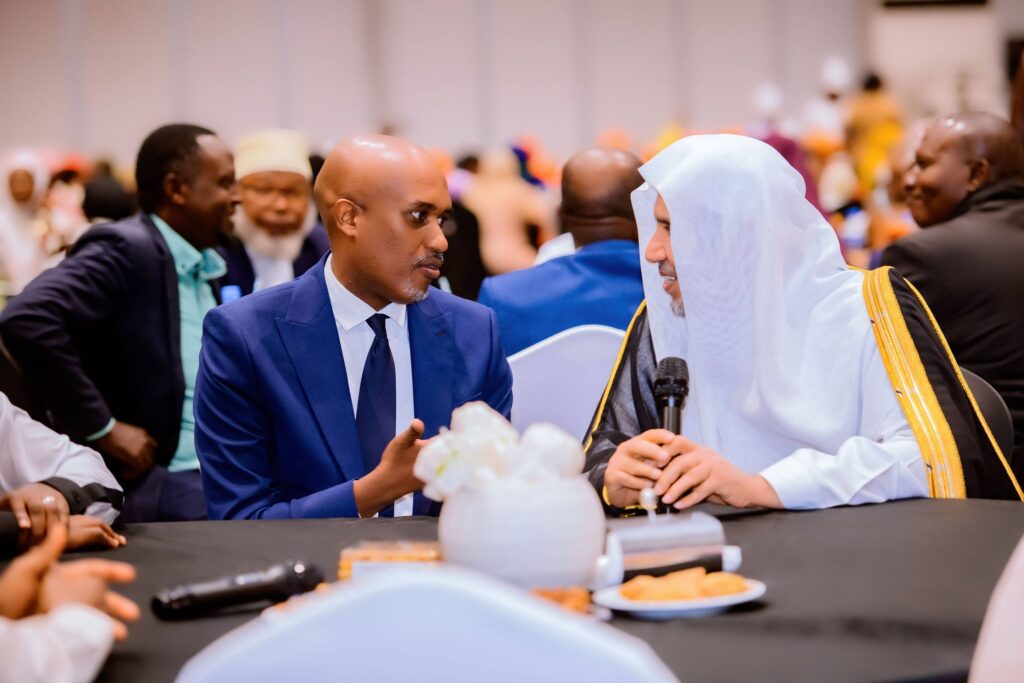
Following the memorial visit, the delegation participated in an interfaith dialogue bringing together Rwandan Muslims and leaders from other religious communities. Discussions focused on promoting peaceful coexistence and social harmony, highlighting how communities can thrive together despite religious differences.
Sheikh Dr. Muhammed praised Rwanda’s achievements in national unity and reconciliation, noting that the country serves as a model for others in the region.
The signed partnership includes support for the Rwanda International Qur’an Competition, aimed at promoting memorization and recitation of the Holy Qur’an, as well as funding for mosque construction and other community initiatives aligned with Rwanda’s development goals.
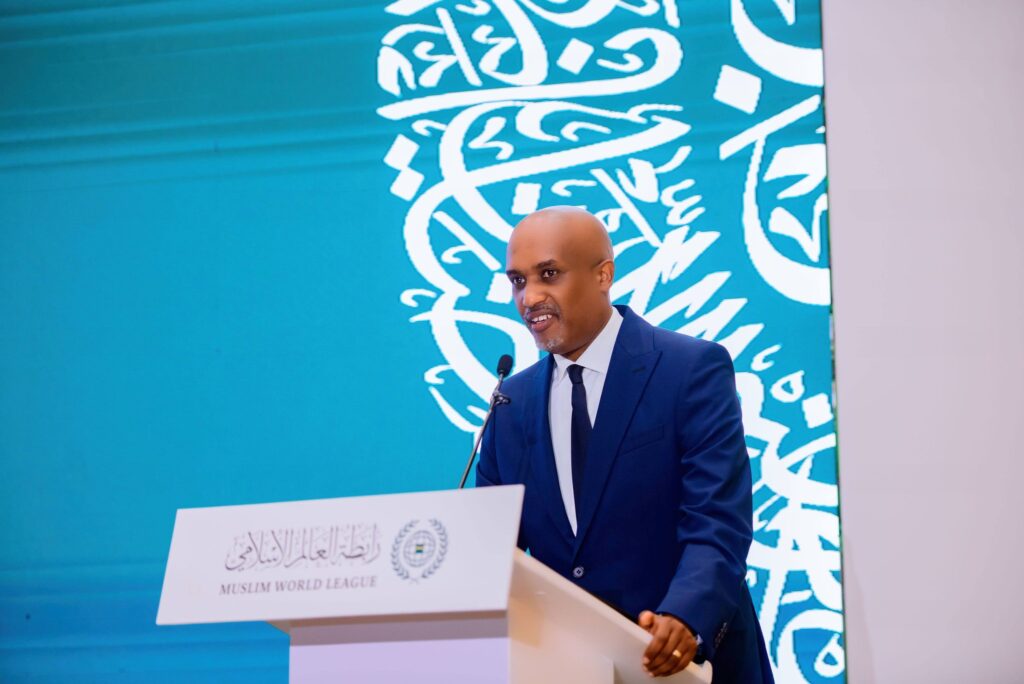
Rwanda’s Minister of Justice and Attorney General, Dr. Emmanuel Ugirashebuje, lauded MWL for its focus on peace and interfaith cooperation, emphasizing that the organization’s objectives complement Rwanda’s post-genocide journey of unity and social cohesion.
Referencing President Paul Kagame’s message during the 30th genocide commemoration, Dr. Ugirashebuje highlighted Rwanda’s commitment to responsibility, shared values, and forward-looking leadership.
Rwanda’s Mufti, Sheikh Musa Sindayigaya, noted that the government’s good governance and inclusive approach have fostered trust among citizens. Through the Rwandan Interfaith Council (RIC), religious leaders contribute to national unity and sustainable development.
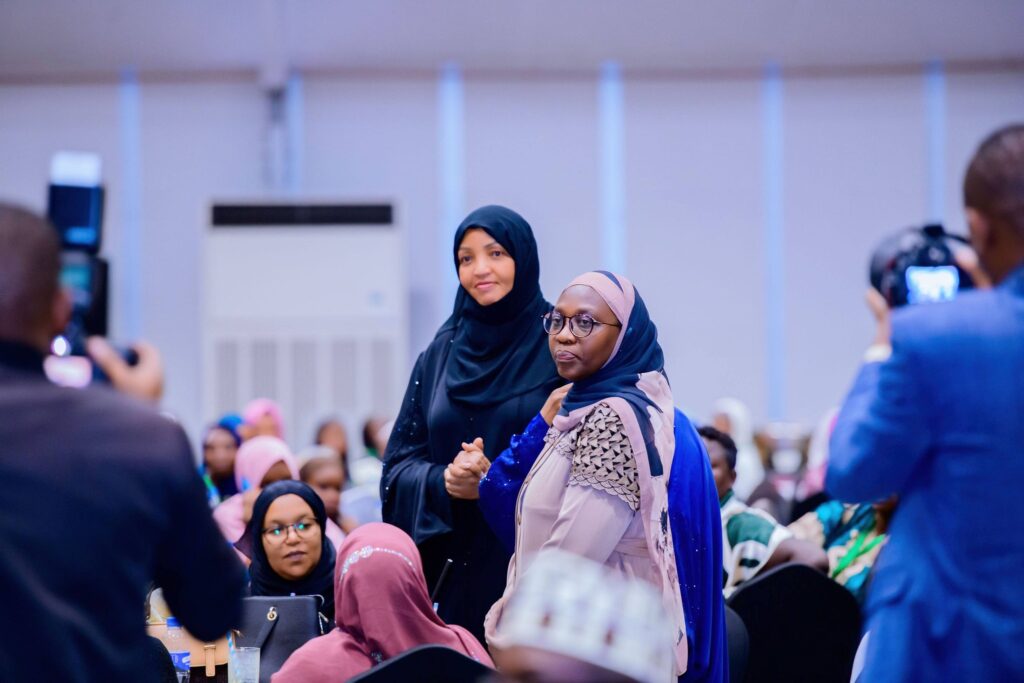
The visit concluded with a communal iftar attended by over 1,000 participants from across Kigali, reinforcing solidarity and the spirit of shared community values.