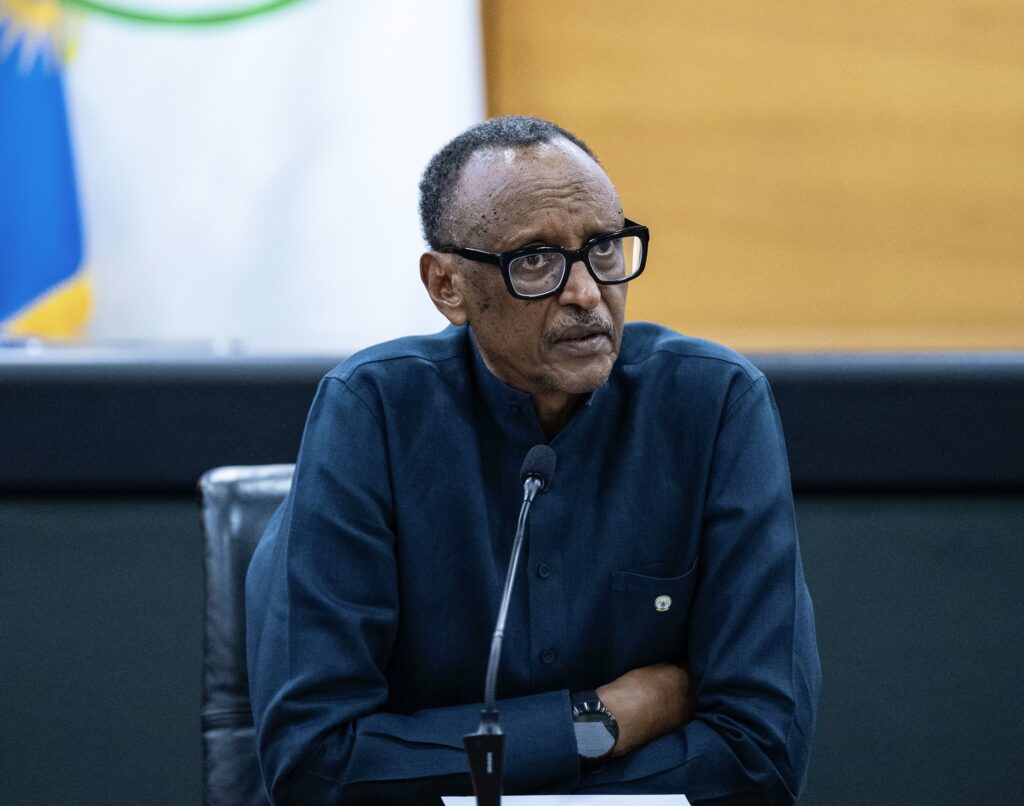
President Paul Kagame has criticized individuals and institutions that continue to offer poor services, urging Rwandans to speak out whenever they encounter substandard treatment.
He made the remarks on November 27, 2025, during an interview with both local and international journalists.
The annual Rwanda Governance Scorecard (RGS), released by the Rwanda Governance Board (RGB), showed that the safety and security pillar remains highly appreciated with a score of 90.02%. However, the quality of service delivery declined from 75.79% to 71.73%, while the governance and economic institutions pillar stood at 74.84%.
When asked about persistent poor service in some public and private institutions, President Kagame said responsibility lies with those who deliver the services.
“Those who provide poor service must learn to accept being told to improve. Rwandans should not accept poor services—especially when paying—and leave silently. No, you must reject it,” President Kagame said.
He urged the public, including journalists, to expose such cases. “You too, as journalists, should bring it to light. Next time, mention who gave you poor service. Government institutions must follow up because if they don’t, they will also be held accountable. Poor service should not be tolerated from anyone.”
President Kagame underscored that citizens must actively speak out about poor service.
“Poor service will not disappear if you continue to tolerate it. Why would you return to a place where you are badly served and still pay? Are you satisfied with that? This is a serious issue. Speak out, discuss it. Poor service must be rejected, exposed, criticized, and those responsible must be held accountable,” he said.
The Second National Strategy for Transformation (NST2), running from 2024 to 2029, places strong emphasis on improving service delivery across both public and private sectors.
Earlier this month, during a retreat bringing together provincial governors and district mayors to discuss community-centered governance aimed at reducing poverty and enhancing development, the Minister of Local Government, Dominique Habimana, reassured citizens that the persistent service delivery challenges across the country will be addressed as part of broader reforms to bring governance closer to the people.
Minister Habimana added that the planned reforms align with the second phase of NST2, which spans five years and sets the foundation for Rwanda’s journey toward Vision 2050.
“Improving service delivery is aligned with the long-term national vision over the next 25 years as we move toward 2050, while also fulfilling the commitments we have made under NST2,” he said.