A joint meeting bringing together rice farmers and rice-processing industries in Rwanda has approved new reference prices to guide the sale of rice during the 2026 Season A farming cycle.
The meeting was convened by the Rwanda Rice Processors and Millers Industry (RFRMI) in collaboration with the Federation of Rice Farmers’ Cooperatives in Rwanda (FUCORIRWA). The resolutions adopted will be submitted to the Ministry of Trade and Industry (MINICOM) for consideration.
The primary objective of the agreed prices is to reduce losses incurred by farmers due to limited market access, while also preventing excessive price increases that can burden consumers.
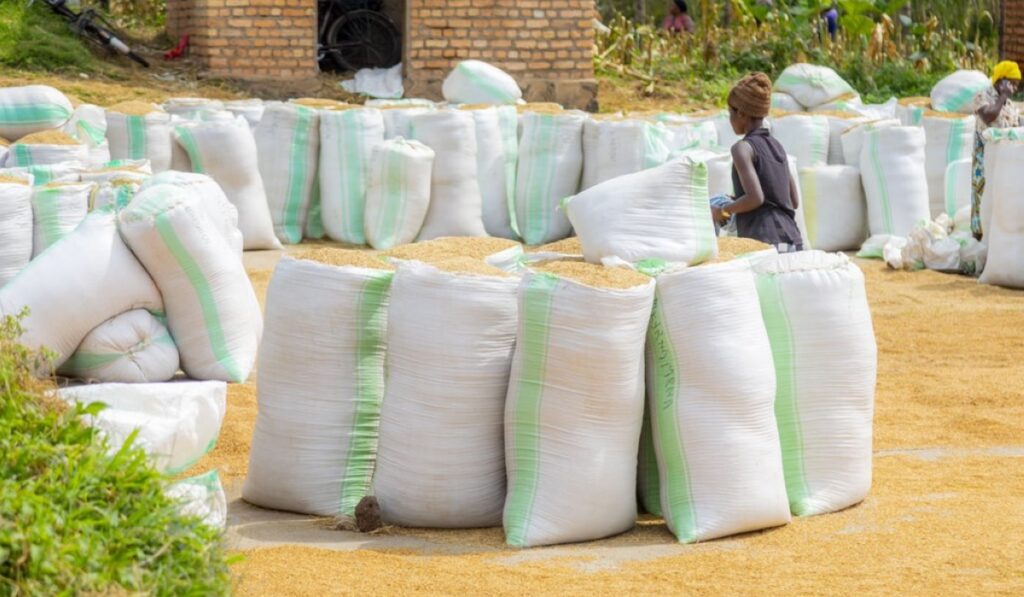
Under the new pricing structure, short-grain rice will sell at Rwf 540 per kilogram, medium-grain rice at Rwf 545 per kilogram, long-grain rice at Rwf 550 per kilogram, while Basmati rice has been set at Rwf 720 per kilogram.
These resolutions align with Rwanda’s Second National Strategy for Transformation (NST2), under which the Government aims to increase agricultural and livestock production by 50 percent by 2029. The strategy also targets full national food self-sufficiency, raising the current rate from 79.6 percent in 2024 to 100 percent.
The value of agro-processed products reached Rwf 1,000 billion in 2024, up from Rwf 369 billion in 2017, highlighting steady growth in the agro-processing sector.
Rice production in Rwanda continues to expand, but a significant supply gap remains, necessitating imports—particularly from Tanzania—to meet domestic demand.
According to data from the Rwanda Agriculture and Animal Resources Development Board (RAB), Rwanda cultivated 35,167 hectares of rice in 2024, with an additional 2,000 hectares expected to be added in 2025, bringing the total to 37,167 hectares.
Rice production reached 141,932 tonnes in 2024, representing a 6.2 percent increase compared to the 133,628 tonnes harvested in 2023.
The Government has put in place several initiatives to boost rice production, including expanding rice cultivation areas in districts such as Gisagara, Gatsibo, Nyagatare, and Rusizi, as well as implementing a long-term rice development program aimed at sustainably increasing production through 2030.