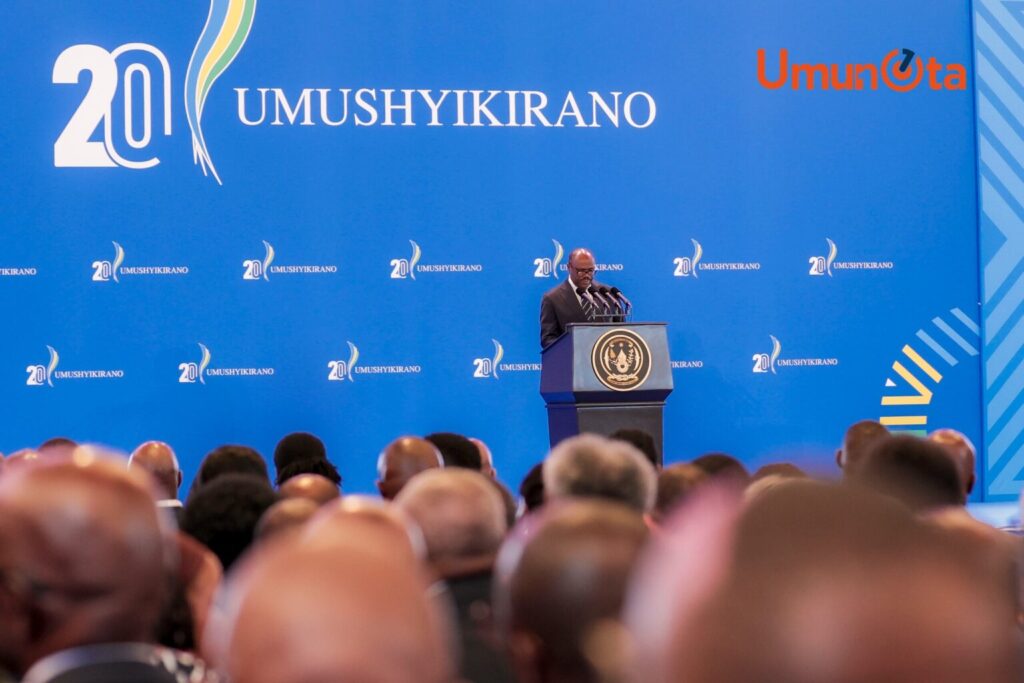
The Government of Rwanda has unveiled 12 major resolutions from the 20th National Dialogue (Umushyikirano), structured around three strategic pillars: economy, social welfare, and governance.
The dialogue, held on February 5-6, 2026, in Kigali under the leadership of President Paul Kagame, brought together senior officials and sector representatives to review progress, address challenges, and make decisions aimed at fast-tracking national development.
President Kagame described the National Dialogue as a crucial platform for assessing achievements, tackling persistent issues, and adopting actionable measures to improve citizens’ livelihoods.
“This dialogue builds on past discussions. Each session produces decisions that drive tangible progress, laying the foundation for further initiatives and ensuring the country continues advancing,” Kagame said. He also stressed the importance of accountability, urging leaders to manage public resources responsibly.
Prime Minister Justin Nsengiyumva presented achievements under the second National Strategy for Transformation (NST2), highlighting sustainable economic growth, Rwanda’s international standing, and the state of governance, education, and employment.
Economic resolutions include:
- Strengthening project planning and execution to meet timelines, achieve objectives, and ensure accountability.
- Developing mining infrastructure and enhancing mineral value.
- Boosting agricultural and livestock productivity through quality inputs, irrigation services, and technology-driven breeding.
- Supporting industries to increase output, competitiveness, and product value while resolving processing challenges.
- Streamlining One Stop Centres to simplify procedures and ensure citizen awareness of available services.
- Accelerating SACCO network integration at district and national levels.
Social welfare resolutions focus on:
- Enhancing education quality to align with labor market needs, nurture student talent, and improve language instruction, particularly in English.
- Expanding youth infrastructure, skills training, and practical knowledge to improve employability.
- Supporting youth recreation, vocational training, creativity, and talent development.
Governance resolutions include:
- Strengthening performance contracts (imihigo) to address citizen needs, deliver quality services, and improve security.
- Increasing citizen engagement to ensure meaningful participation in decision-making.
- Intensifying measures to prevent teenage pregnancies, school dropouts, abuse of authority, and substance abuse.
These resolutions signal Rwanda’s commitment to citizen-centered governance, sustainable development, and measurable accountability, providing a roadmap for the next phase of national progress.