Rwanda has reported significant progress in its national HIV/AIDS response, saying it has surpassed key global targets set by the World Health Organization (WHO), while urging continued international cooperation and investment to achieve the goal of ending AIDS as a public health threat by 2030.
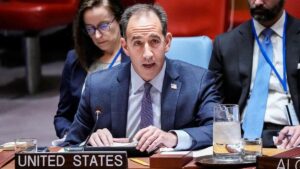
The statement was delivered by Rwanda’s Permanent Representative to the United Nations, Ambassador Martin Ngoga, during a high-level UN General Assembly meeting on HIV/AIDS held in New York on June 22, 2026.
Amb. Ngoga said Rwanda stands with African countries in supporting resolutions adopted at the meeting and commended countries including Georgia and Botswana for their contributions to strengthening global HIV/AIDS response efforts.
He said Rwanda’s progress is anchored in strong national policies focused on prevention, early diagnosis, and universal access to treatment through the country’s community-based health insurance system.
“Rwanda has surpassed the global 95-95-95 targets, with 96% of people living with HIV knowing their status, 98% of those diagnosed receiving treatment, and 98% of those on treatment achieving viral suppression,” he said.
He noted that these achievements reflect strong national ownership, cross-sector collaboration, and efforts to ensure equitable access to health services without discrimination.
Rwanda also reported continued progress in reducing mother-to-child transmission of HIV to below 2%, attributing this success to integrated maternal and child health services and expanded testing for HIV, syphilis, and hepatitis B.
The country further highlighted the role of digital health systems in improving patient monitoring, data management, and evidence-based decision-making, which have strengthened the efficiency of HIV service delivery.
However, officials acknowledged ongoing challenges, including stigma and discrimination affecting vulnerable groups, as well as gender-based violence against women and girls, which continue to hinder access to health services.
Amb. Ngoga called for stronger global action to address these barriers, stressing the need to combat stigma, harmful social norms, and inequality in order to improve health outcomes.
On financing, Rwanda noted that while domestic investment in the health sector continues to increase, declining external support risks slowing down progress achieved so far.
“There is a need for sustainable and equitable financing mechanisms to ensure that gains made are not reversed,” he said.
He urged the international community to strengthen partnerships, increase investment, and reinforce cooperation to ensure effective implementation of global commitments aimed at ending AIDS by 2030.
According to official data, around 230,000 people living with HIV in Rwanda are currently receiving care, while new infections have declined to approximately 3,200 per year.