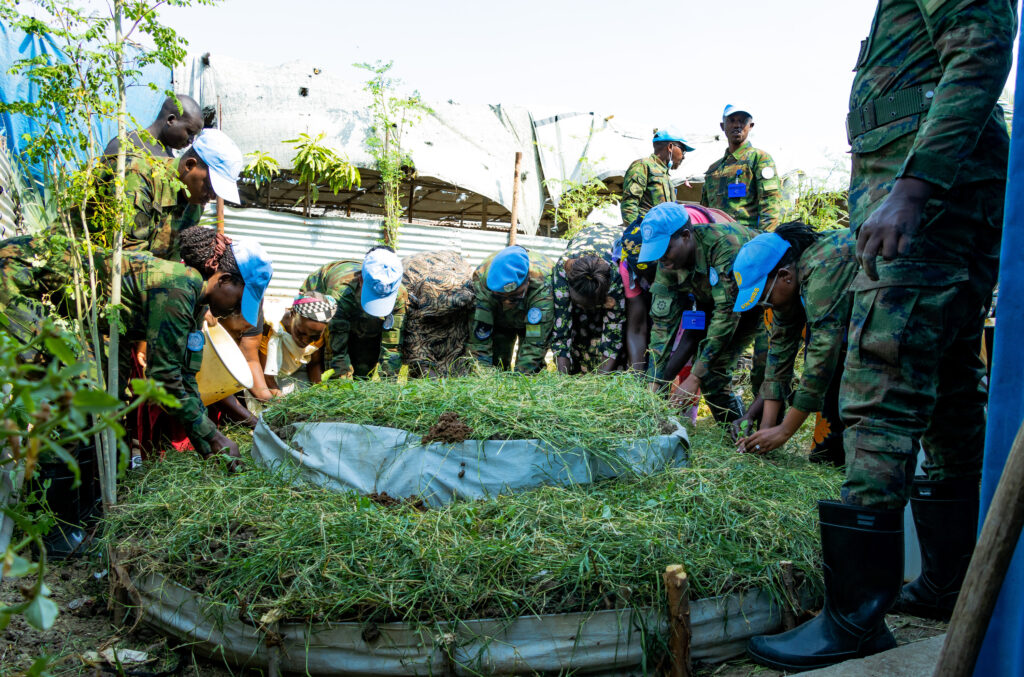
Rwandan peacekeepers serving under the United Nations Mission in South Sudan (UNMISS), through RWANBATT-2, have joined residents of Malakal in Upper Nile State for a community work exercise aimed at improving sanitation and promoting better nutrition.
The exercise, held on November 7, 2026, brought together the peacekeepers, camp representatives and local authorities. It focused on cleaning the camp and surrounding areas to help prevent the spread of diseases in the densely populated community.
The initiative is part of the Rwandan contingent’s efforts to promote good health, hygiene and the general well-being of local residents.
Following the clean-up exercise, women from Malakal Camp participated in an awareness campaign aimed at tackling child malnutrition. RWANBATT-2 soldiers also demonstrated how to establish kitchen gardens for growing vegetables, enabling families to access nutritious food and improve their diets.
Silvio Stephan, who spoke on behalf of the Malakal Camp leader, thanked the Rwandan peacekeepers for their continued cooperation and support to the local community.
“Rwandan soldiers have become our brothers and sisters because of the support and cooperation they continue to show us. We sincerely appreciate these activities and ask them to maintain this valuable partnership with our community,” he said.
RWANBATT-2 Commander, Lieutenant Colonel Emmanuel Ndahiro, emphasised that sanitation activities are among the key measures for preventing diseases such as malaria. He encouraged residents to sustain similar initiatives in the future.
“As peacekeepers, our responsibilities go beyond maintaining peace and security. We are also committed to supporting communities through initiatives that promote health, self-reliance and unity. Today’s activity is another demonstration of the strong partnership between RWANBATT-2 and the people of Malakal,” he said.
The commander also highlighted the importance of kitchen gardens in improving household nutrition, noting that access to vegetables could significantly help reduce malnutrition among vulnerable groups, particularly children.
Nyabol Ajak, one of the women who participated in the activity, thanked the Rwandan peacekeepers for sharing practical knowledge and useful information during discussions on healthy nutrition.
She said access to a balanced diet remains a major challenge for many families living in the camp, with malnutrition continuing to affect some children in the area.
Ajak expressed confidence that establishing kitchen gardens would help families improve their diets, increase access to vegetables and contribute to a healthier and more sustainable future for the community.