Rwanda has been recognized as one of the world’s strongest performers in human capital development, according to the World Bank Group, which highlights the country’s sustained investment in education, health, and employment as key drivers of long-term economic growth.
The assessment is based on the expanded Human Capital Index Plus (HCI+), which measures how countries transform investments in people into productive skills and economic output across a lifetime.
Rwanda emerged as a top performer relative to its income level, outperforming both regional and global averages in key development indicators.
The country scored 157 out of 325 on the HCI+, significantly above the Sub-Saharan Africa average of 126 and the developing country average of 116.
According to the World Bank, Rwanda’s progress is anchored in consistent improvements in health outcomes, education quality, and job creation over the past two decades.
Life expectancy indicators show that 79% of Rwandans survive to the age of 50, compared to the regional average of 73.8%. In child welfare, 70.2% of children are not affected by stunting, outperforming the average for low-income countries at 63.9%.
Education outcomes also place Rwanda ahead of regional peers, with a score of 417 points—well above the Sub-Saharan Africa average of 341 and the developing countries’ average of 342.
At higher education level, 22% of Rwandans complete tertiary education, more than double the regional average of 10.9%, reflecting increasing access to advanced skills training.
Labor market indicators further highlight Rwanda’s performance, with youth employment at 55%, compared to the regional average of 50.8%, while overall adult employment stands at 62.4%, more than twice the regional benchmark of 30.1%.
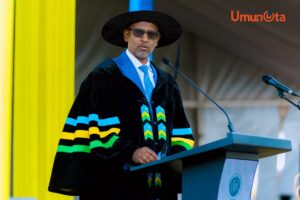
Minister of Finance and Economic Planning Yusuf Murangwa said the recognition reflects Rwanda’s deliberate strategy of prioritizing human capital as the foundation of development.
He noted that sustained investment in healthcare, education, and job creation continues to deliver measurable improvements in both social welfare and economic productivity.
The HCI+ expands the traditional Human Capital Index by incorporating additional indicators such as tertiary education, labor market participation, and job quality, offering a broader measure of how human development translates into economic performance.
While Rwanda has surpassed regional and peer-country averages, authorities say efforts are ongoing to strengthen human capital further as part of the country’s long-term ambition to reach upper-middle-income status by 2035.