Rwanda has renewed its call for the United Nations Security Council to approve the relocation of the International Criminal Tribunal for Rwanda (ICTR) archives to Kigali, arguing that preserving the documentation in the country where the 1994 Genocide against the Tutsi occurred would strengthen historical justice, accessibility, and relevance to survivors.
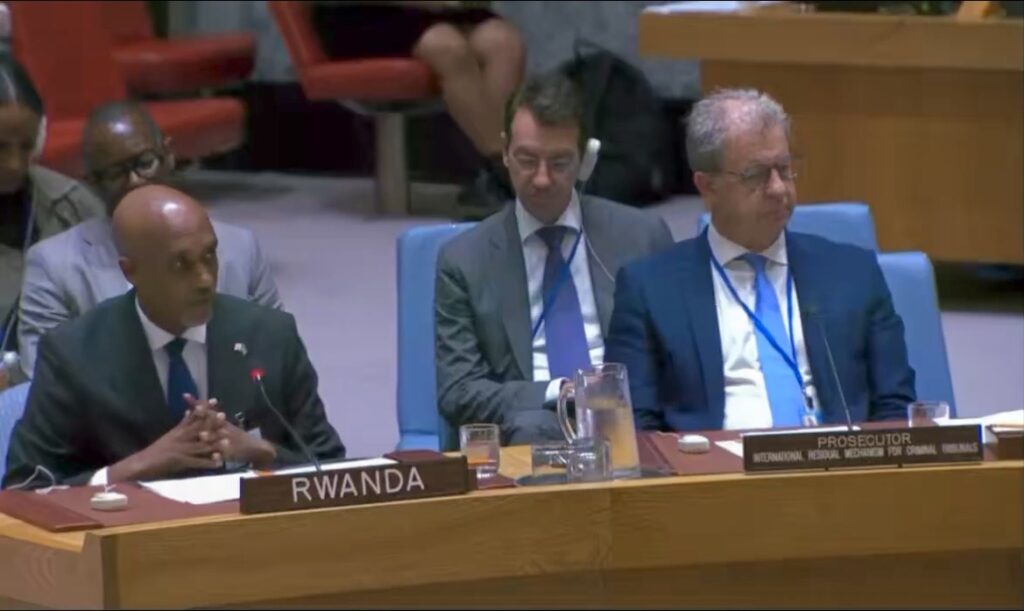
The appeal was made by Minister of Justice and Attorney General Emmanuel Ugirashebuja during a UN Security Council session on June 12, 2026, in New York, which reviewed the work of the International Residual Mechanism for Criminal Tribunals.
Ugirashebuja told the Council that the location of the ICTR archives is a matter of principle tied to justice and historical responsibility, stressing that the records are central to Rwanda’s national memory.
He described the archives as uniquely linked to one country, one people, and one genocide, arguing that they cannot be separated from Rwanda’s historical context and should be preserved where they carry the greatest meaning and accessibility.
The minister also commended the leadership of the Residual Mechanism, led by President Graciela Gatti Santana and Prosecutor Serge Brammertz, for progress in fulfilling its mandate, and highlighted long-standing cooperation between Rwanda and the ICTR and its successor body.
Ugirashebuja said Rwanda has already put in place the required infrastructure, digitisation capacity, legal frameworks, and skilled personnel to host the archives, and is prepared to fully finance the transfer, preservation, and digital management process.
He added that relocating the archives would carry significant symbolic value for survivors of the Genocide against the Tutsi, representing the return of a crucial part of their history to its place of origin.
Rwanda also reiterated its commitment to supporting remaining ICTR-related functions, including cooperation in tracking more than 1,000 genocide fugitives still at large globally, and expressed willingness to host liaison offices to facilitate ongoing judicial cooperation.
The government further restated its readiness to receive individuals convicted by the ICTR to serve their sentences, as well as acquitted persons or those who have completed their sentences but remain without permanent relocation arrangements.