Rwanda has reinforced its security measures in response to ongoing threats from armed groups operating in eastern Democratic Republic of Congo (DRC), including the FDLR, which have repeatedly attempted to destabilize the country.
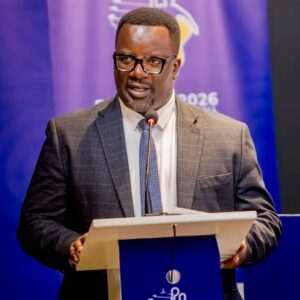
Ambassador Olivier Nduhungirehe, Rwanda’s Minister of Foreign Affairs and International Cooperation, made the remarks in an interview with Joshua Barnes of India’s Firstpost, highlighting the country’s regional security concerns and its cooperation with India and other African partners.
“Our relationship with India is excellent,” Nduhungirehe said. “India is the second-largest investor in Rwanda, particularly in industry and technology, which are critical sectors for our national development.”
On regional security, Nduhungirehe emphasized that the presence of FDLR fighters in DRC poses a direct threat to Rwanda. “Across our border, perpetrators of the 1994 genocide, including Interahamwe and former soldiers, continue to cross into Rwanda. They are not disarmed by UN peacekeeping forces or other foreign troops and are instead supported, sometimes even absorbed into the DRC armed forces,” he explained.
The minister underscored the lasting impact of the 1994 genocide on Rwanda, stressing that any resurgence of genocidal ideology in neighboring countries is taken extremely seriously. “We know the suffering of 1994, and we cannot allow our security to be compromised by forces operating near our borders, including the FDLR and other militias supported by DRC authorities,” he said.
Nduhungirehe added that these security challenges prompted Rwanda to adopt protective measures. “That is why we have implemented defense measures, and we will continue to protect our citizens and borders,” he said.
He also questioned the effectiveness of U.S. sanctions on Rwanda’s military and officials, noting that punitive measures alone cannot resolve the conflicts involving the AFC/M23 groups in eastern DRC. “Sanctions are not new. In 2012-2013, similar measures were imposed during the first M23 conflict.
Those disputes were temporarily addressed militarily in 2013, but the underlying causes remained unresolved, which is why the conflict resurfaced in November 2021,” Nduhungirehe said.
He added that the DRC government has repeatedly shifted its internal issues onto Rwanda, including allegations of supporting the AFC/M23 rebels, complicating regional security dynamics.