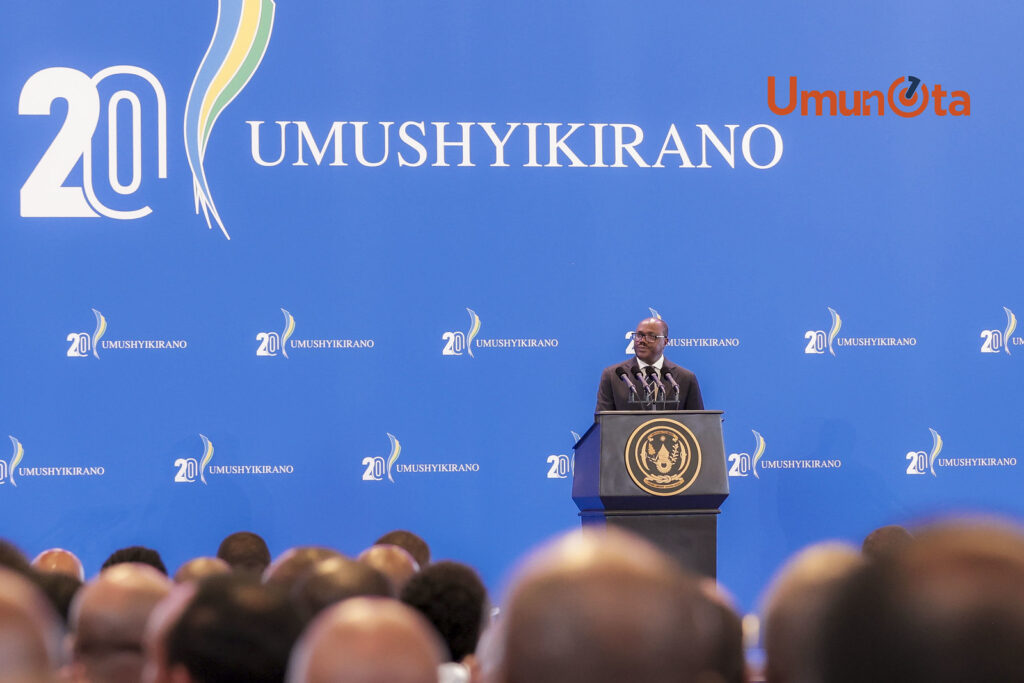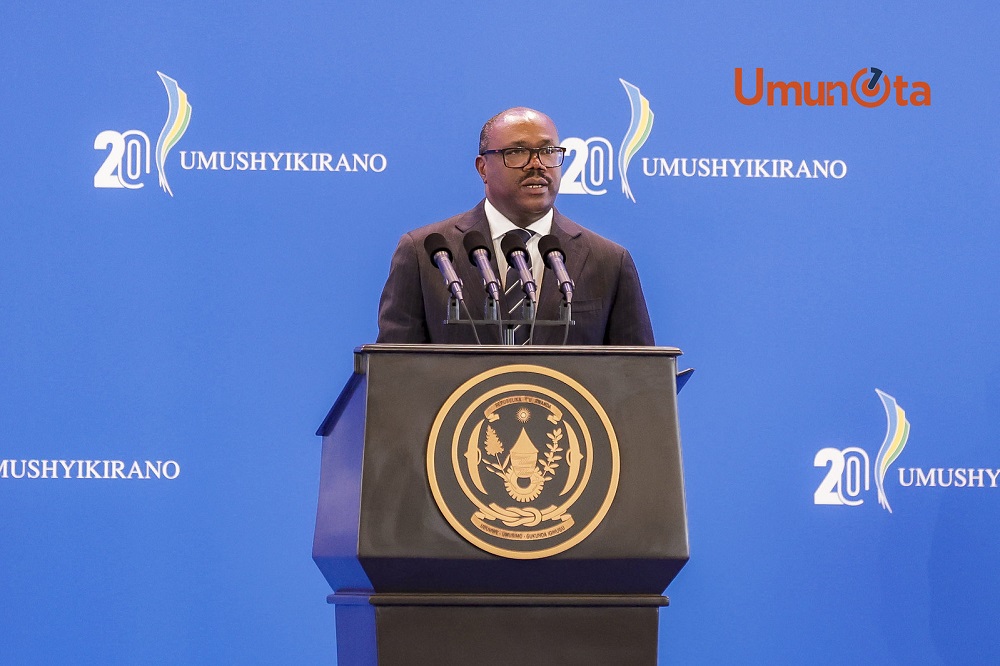
Prime Minister Dr. Justin Nsengiyumva has announced that Rwanda’s economy grew to 8.9 percent under the second National Strategy for Transformation (NST2), up from 8.2 percent in 2023, surpassing government projections.
He made the remarks on Thursday, February 5, 2026, while presenting the national economic outlook at the opening of the 20th National Umushyikirano Council held at the Kigali Convention Center.
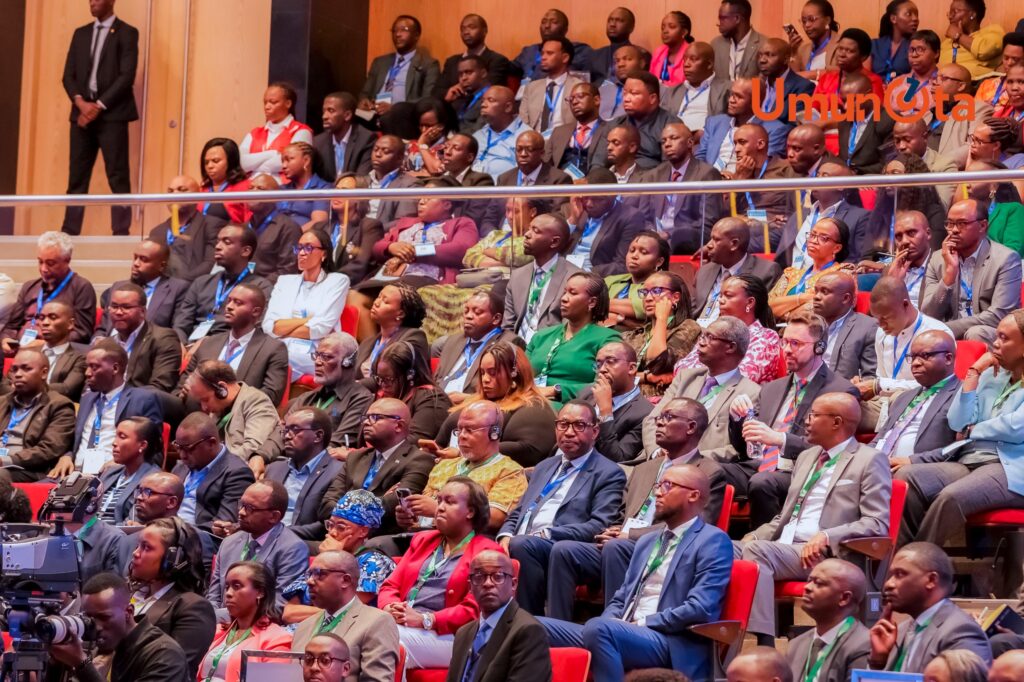
The high-level forum brought together senior government officials, members of Parliament, faith-based organisations, civil society leaders and citizens from across the country.
Presenting progress under NST2, Dr. Nsengiyumva said Rwanda’s economy has maintained a strong and resilient growth trajectory despite global and regional economic pressures.
“We are encouraged by the continued momentum of our economy. In 2024, growth rose from 8.2 percent in 2023 to 8.9 percent, exceeding the projected target of 8.3 percent,” he said.
He noted that during the first three quarters of 2025, the economy recorded an average growth rate of 8.7 percent, driven by quarterly expansions of 6.5 percent in the first quarter, 7.8 percent in the second quarter and a robust 11.8 percent in the third quarter.
Key sectors drive growth
According to the Prime Minister, the strong performance was anchored in agriculture, industry and services.
The agriculture sector grew by an average of 7 percent in the first three quarters of 2025, up from 5 percent in 2024. Industry expanded by 10 percent, while the services sector recorded 9 percent growth.
“These results confirm that the economy is on a solid footing and give us confidence that the targets we have set under NST2 are achievable,” he said.
Job creation and falling unemployment
Dr. Nsengiyumva said the expansion across sectors has translated into improved labour market outcomes. The unemployment rate declined from 15 percent in 2024 to 11.7 percent by the end of 2025, down from a peak of 20.3 percent during the COVID-19 period.
Under NST2, Rwanda aims to create at least 250,000 non-agricultural jobs annually, focusing on skills-based and higher-paying employment.
Since early 2024, more than 800,000 jobs have been created, with approximately 760,000, representing 93 percent being non-agricultural, he said.
Exports and revenues strengthen
The Prime Minister reported strong growth in exports, with export earnings rising from USD 3.5 billion to USD 5.7 billion in 2024–2025, an increase of 60.8 percent. Under NST2, the country targets USD 7.3 billion in export revenues.
“This increase in exports has significantly narrowed the trade gap between exports and imports, reflecting Rwanda’s growing productive capacity and progress towards self-reliance,” he said.
Domestic revenue mobilisation also improved, with tax collections exceeding Rwf 3.2 trillion, up from Rwf 2.7 trillion in the 2023–2024 fiscal year. Dr. Nsengiyumva commended taxpayers for their contribution to national development.
Rising savings and investment
The Prime Minister said domestic savings increased from 12 percent to 15.6 percent of GDP, signalling a growing culture of savings among Rwandans.
He highlighted gains under the Ejo Heza long-term savings scheme, which mobilised Rwf 52.8 billion in 2024–2025, adding that ongoing reforms are expected to further enhance its effectiveness.
Private sector investment also strengthened, rising from USD 2.2 billion in 2023–2024 to USD 2.7 billion. Under NST2, the government targets USD 4.6 billion in private investment annually.
Targets met, outlook positive
In conclusion, Dr. Nsengiyumva said Rwanda has largely met and in several areas exceeded its economic targets.
“Overall, we achieved the goals we set for ourselves last year to a satisfactory level, and in some cases even surpassed them. This gives us confidence that by continuing to work together and prioritising productivity across all sectors, we will achieve our development ambitions,” he said.