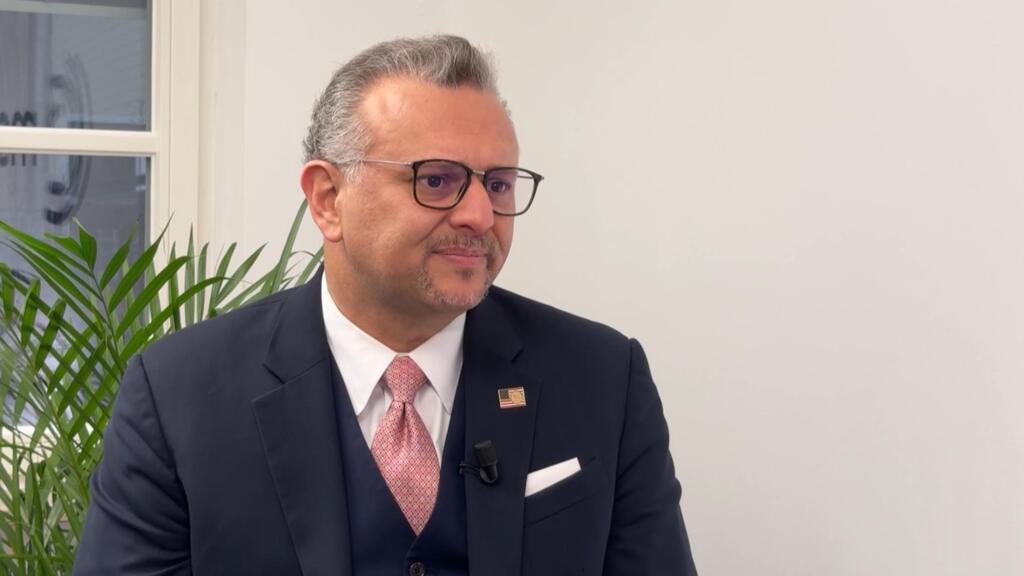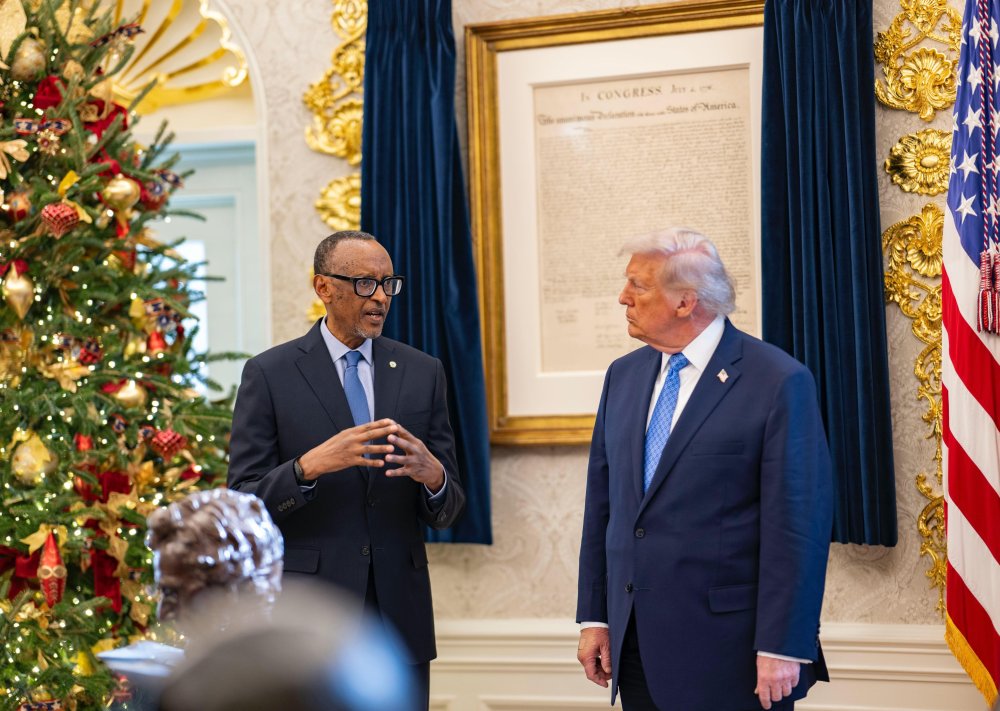
U.S. President Donald Trump’s senior adviser on African affairs, Massad Boulos, has indicated that no final decision has been made on whether the United States will impose sanctions on Rwanda’s President Paul Kagame.
Boulos made the remarks during an interview with France 24 journalist Marc Pellerman, who asked whether the Trump administration was considering punitive measures against Kagame over alleged violations of a peace agreement signed in Washington between Rwanda and the Democratic Republic of the Congo in late 2025.
Responding to questions about whether President Kagame had breached the trust of Washington and President Trump personally, Boulos acknowledged what he described as a “serious violation” of the Washington accord but stopped short of detailing any immediate consequences.
On whether the United States still has confidence in Kagame, Boulos answered affirmatively.
“We do,” he said. “We are in discussions with him. We have not yet seen tangible changes on the ground. However, after the M23 took control of the city of Uvira, we engaged President Kagame and that engagement yielded results, as they withdrew from Uvira.”
He was also asked about growing calls within the U.S. Congress to sanction Kagame, and whether specific measures were being prepared against Rwanda or its head of state.
“The United States has a wide range of tools at its disposal,” Boulos said. “We will take some of those steps.”
When reminded that President Kagame has previously downplayed the impact of sanctions, Boulos pointed to measures already taken in recent months, including sanctions announced in September targeting individuals and entities. Among those sanctioned was retired General James Kabarebe, described as a close associate of Kagame.
Pressed further on whether sanctions directly targeting Kagame were under consideration, Boulos declined to speculate, emphasizing that such decisions would ultimately be made by President Trump. He added that the Washington agreement remains a matter of significant importance to the United States.
Addressing suggestions that the accord had failed to achieve its objectives, Boulos rejected that view.
“The agreement has not failed,” he said. “We are still at the beginning. The Washington signing was a starting point, not the end. The ultimate goal is lasting peace and stability in the region. It is a process, and it will take time.”
He also noted that the Washington deal is supported by parallel diplomatic efforts, including the Doha talks between Kinshasa and the AFC/M23 coalition, which he said are strongly backed by Washington.
The peace agreement between Rwanda and the Democratic Republic of the Congo was signed in Washington on December 4, 2026. It includes commitments on respecting territorial integrity, ending hostilities, dismantling armed groups, establishing a joint security mechanism, facilitating refugee repatriation and humanitarian access, defining the role of MONUSCO, and promoting regional economic cooperation.
Rwanda has maintained that dismantling the FDLR rebel group—accused by Kigali of threatening its national security—must be prioritized in implementing the agreement.
Recently, Rwanda’s Minister of Foreign Affairs and International Cooperation, Amb. Olivier Nduhungirehe, said no sanctions would prevent Rwanda from defending its borders as long as the FDLR remains active in eastern Congo with what Rwanda describes as destabilizing intentions.