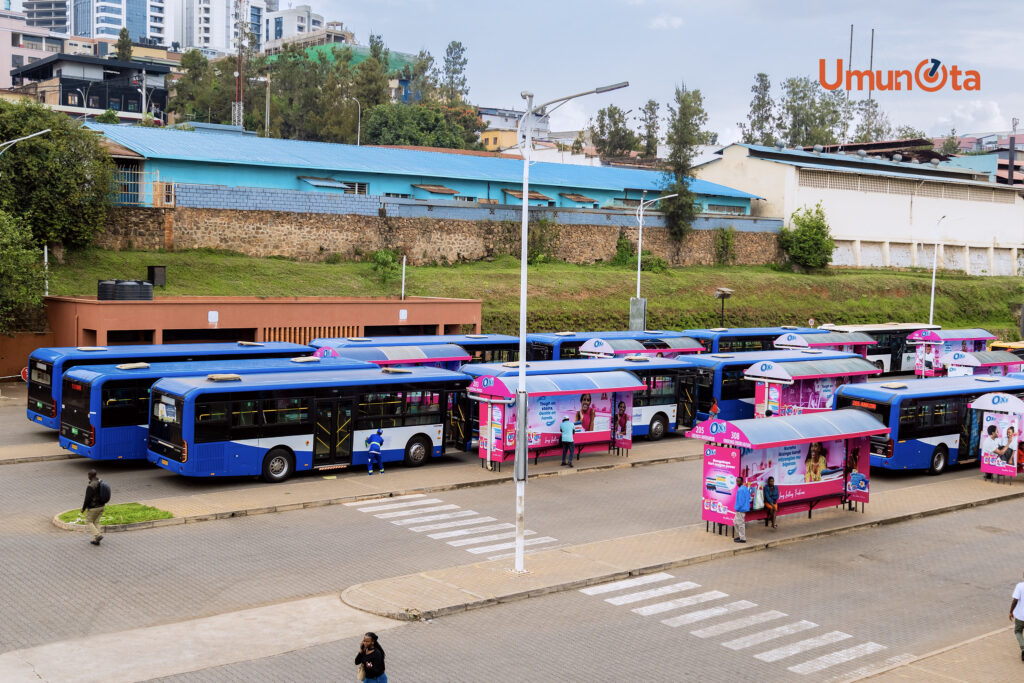
Rwanda is stepping up measures to address rising fuel prices while reducing emissions from petrol-powered vehicles, as part of a broader push toward sustainable urban mobility.
Authorities are increasingly urging residents of Kigali—including private car owners—to opt for public buses in their daily commutes, highlighting both economic and environmental benefits.
The initiative comes amid efforts to manage fuel consumption in the face of global supply pressures, including ongoing instability in the Middle East, while also tackling persistent traffic congestion in the capital.
Kigali City spokesperson Ntirenganya Emma Claudine said choosing public transport should be seen as a collective responsibility. She noted that leaving private cars at home helps preserve national fuel reserves, making them last longer during a period of uncertainty.
Transport and economic experts warn that heavy reliance on private vehicles is costing the country. Egide Karuranga estimates that losing just one hour daily in traffic amounts to about 320 hours annually—equivalent to nearly 40 working days. At scale, such losses significantly affect national productivity.
He added that increased bus usage would not only ease congestion but also reduce fuel consumption, supporting more efficient resource management.
To improve the efficiency of public transport, Rwanda is piloting a smart system that enables commuters to track buses in real time, including their location, seat availability and expected arrival times. Rukera Aubin, head of Ecofleet Solutions, confirmed that the technology is already in use on a trial basis.
The city has also introduced dedicated bus lanes to speed up movement and make public transport more reliable.
Officials say shifting to buses can significantly lower commuting costs, reduce fuel consumption and cut traffic congestion, ultimately improving travel times. The use of electric buses further supports environmental protection by limiting air pollution.