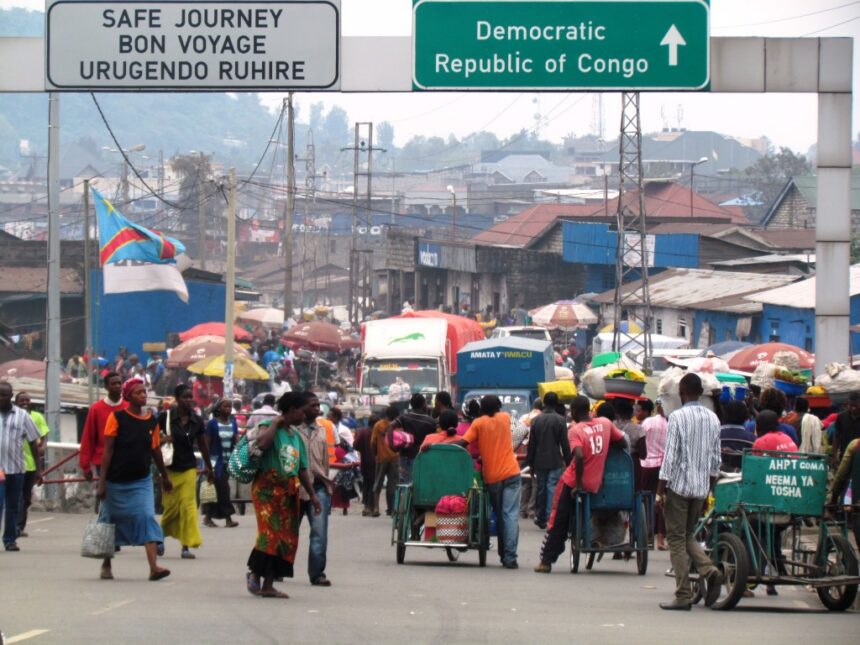
Women continue to play a significant role in Rwanda’s business sector, both in formally registered enterprises and informal cross-border trade, where they accounted for 61 per cent of traders in 2024, compared with 39 per cent for men.
The figures highlight women’s strong participation in commercial activities, particularly trade between Rwanda and neighbouring countries, despite persistent challenges in accessing loans, capital and time to expand their businesses.
The findings are contained in a report titled Measuring Gender-in-Trade Statistics: Country Report Rwanda, prepared by the United Nations Economic Commission for Africa (ECA) and released by the National Institute of Statistics of Rwanda (NISR) on November 19, 2026.
The report draws on research examining the participation of women and men in trade, their involvement in income-generating activities and the challenges they face in running and expanding businesses.
In formally registered businesses, women account for 46 per cent of employees, while 45 per cent of senior management positions are held by women. Their participation in companies engaged in international trade has also increased, rising from 26 per cent to 38 per cent.
Despite their growing presence across the business sector, women’s participation is particularly high in informal cross-border trade. In 2024, they represented 61 per cent of traders, compared with 39 per cent for men.
The value of exports by women-owned businesses also increased significantly, rising from $261 million in 2017 to $1.16 billion in 2021.
These gains have coincided with improvements in women’s access to education and financial services. In 2024, women accounted for 51.8 per cent of students enrolled in higher education institutions, compared with 48.2 per cent for men. Female literacy also increased from 60.1 per cent in 2006 to 73.6 per cent in 2024.
Access to financial services has improved as well. The proportion of women with mobile money accounts rose from five per cent in 2010 to 78 per cent in 2024, enabling greater use of digital platforms for business transactions, money transfers and payments.
However, access to credit remains a major challenge. In 2024, only eight per cent of women applied for and obtained loans, compared with 13 per cent of men.
The report attributes these difficulties partly to collateral requirements imposed by financial institutions, the high number of women operating informal businesses and inadequate business records, which make it harder for them to secure financing for expansion.
It also highlights the impact of domestic responsibilities, including childcare and household duties, on the time women can devote to income-generating activities. In 2024, women spent an average of 3.9 hours a day on unpaid domestic work, compared with 2.5 hours for men.
Although access to childcare services for children under three improved from 12 per cent in 2017 to 77 per cent in 2024, family responsibilities remain a challenge for women seeking to balance household duties with business activities.
Among its recommendations, the report calls for measures to improve women’s access to capital and loans suited to their businesses, strengthen their skills in international trade and support them in adding value to their products instead of relying mainly on selling unprocessed produce.
It also recommends continued collection of gender-disaggregated trade statistics to ensure that policies and programmes are based on reliable evidence and help women expand their businesses, advance into leadership positions and contribute more fully to the national economy.