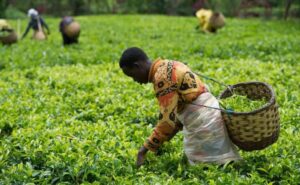
Rwanda is seeking to build on record agricultural export earnings by strengthening value addition, product traceability and access to international markets through a new partnership between the National Agricultural Export Development Board (NAEB) and Connect for Impact Advisory Group (C4Impact).
Aston Villa will showcase the “Visit Rwanda” brand on the front of its shirt for the first time in the Premier League when it opens its 2026/27 campaign away to Brighton & Hove Albion on Sunday, August 23.
Young people in Gisagara District are increasingly turning small livestock farming into a profitable business, creating jobs for themselves and others while improving their livelihoods.
Rwanda is positioning itself as a strategic gateway for Brazilian companies seeking to expand into African markets, as more than 200 business leaders and private-sector representatives from the two countries met in São Paulo to explore new trade and investment opportunities.
Rwanda’s Chamber of Deputies has approved two loan agreements worth a combined Rwf280 billion to support development projects and the government’s efforts to create more sustainable employment opportunities.
Rwanda is studying the possibility of turning some of the islands on Lake Kivu into a national park as the country seeks to expand its tourism offering, protect biodiversity and increase tourism earnings.
Rwanda earned more than Rwf19 billion from agricultural and livestock exports in just five days, according to the latest figures from the National Agricultural Export Development Board (NAEB).
A high-level Rwandan delegation is in Brazil seeking to deepen trade and investment ties and open new opportunities for cooperation in agriculture, innovation, skills development and the private sector.
Rwanda is pushing ahead with an ambitious plan to more than triple the size of its economy by 2035, with the government targeting an economy worth over $40 billion under the “3x Rwanda” strategy.
Rwanda’s urban inflation accelerated to 14.5% in July 2026, up from 13.6% in June, as households faced sharp increases in transport, housing and utility costs, according to the National Institute of Statistics of Rwanda (NISR).
Subscribe to our mailing list to receives daily updates to your inbox!