The International Monetary Fund (IMF) has reached a preliminary agreement to provide Rwanda with $35.7 million under its Extended Credit Facility (ECF), as the country seeks to sustain economic growth while tackling inflation and managing public finances.
The announcement was made on October 6, 2026, following the first review of Rwanda’s ECF programme, conducted during discussions between Rwandan authorities and an IMF team from September 23 to October 6.
However, Rwanda will not receive the money immediately. The IMF Executive Board is expected to make the final decision on the disbursement in December 2026. If approved, the funds will support Rwanda’s ongoing economic development programme.
The IMF said Rwanda’s economy has remained resilient despite continued challenges in the global economy.
The economy grew by 9.7% in the first quarter of 2026, supported in part by exports and remittances, which helped narrow the gap between the country’s imports and exports.
Inflation, however, remains a major challenge. Rwanda’s annual inflation rate reached 15.7% in August, significantly above the 5% target set by the National Bank of Rwanda.
On public finances, the IMF said Rwanda’s fiscal deficit declined to 4.8% of gross domestic product during the 2025/26 financial year.
The Fund has urged Rwanda to continue strengthening domestic revenue collection and carefully prioritise large projects financed through external borrowing to ensure that available resources are directed towards investments with strong economic returns.
Rwanda defends borrowing strategy
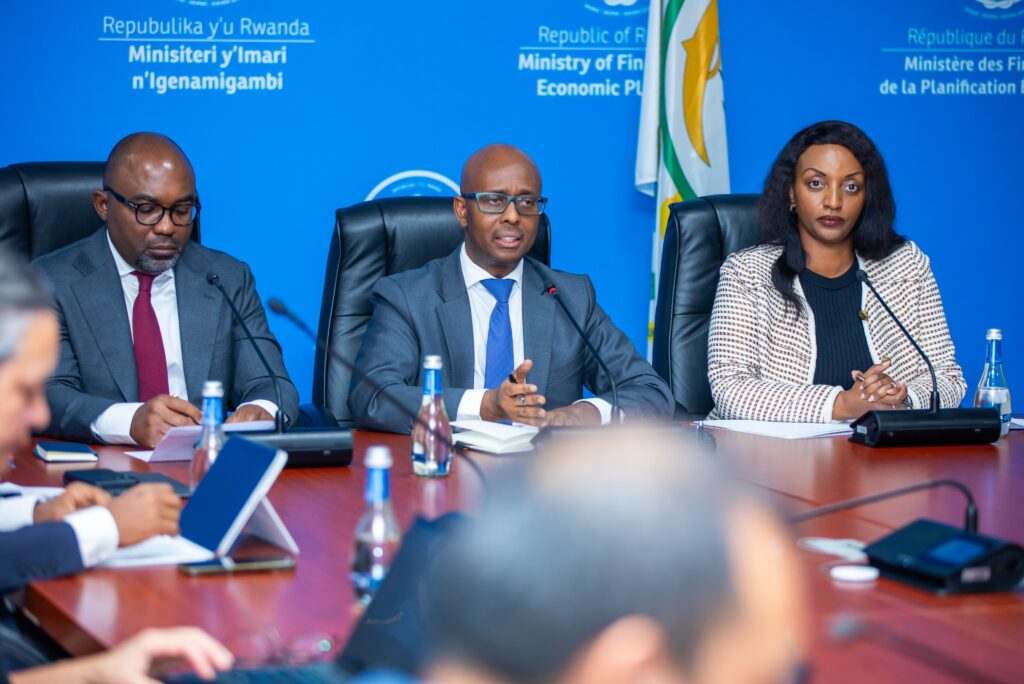
Finance and Economic Planning Minister Yussuf Murangwa said Rwanda would continue borrowing to finance development, but argued that the country’s strategy is to invest borrowed funds in projects capable of expanding economic activity rather than relying mainly on higher taxes to repay debt.
He explained that Rwanda’s borrowing is largely made up of concessional loans, which come with more favourable repayment conditions.
About 90% of the country’s loans fall into this category, according to Murangwa. Such loans often carry no interest or very low interest rates, while allowing long grace periods before repayment begins and repayment periods that can extend to 30 or 40 years.
The remaining roughly 10% consists of loans with somewhat higher interest rates, generally between 1% and 2%.
Murangwa said the government generally avoids borrowing at interest rates above 2.5% and uses relatively more expensive loans mainly to finance projects expected to begin generating revenue within a shorter period.
He cited infrastructure projects as an example, saying the government may borrow at around 2%, benefit from a three- to five-year grace period, and use revenue generated by the completed project to help service the debt.
The latest IMF review therefore comes as Rwanda balances strong economic growth with pressure from high inflation, the need to increase domestic revenue and the cost of financing major development projects.