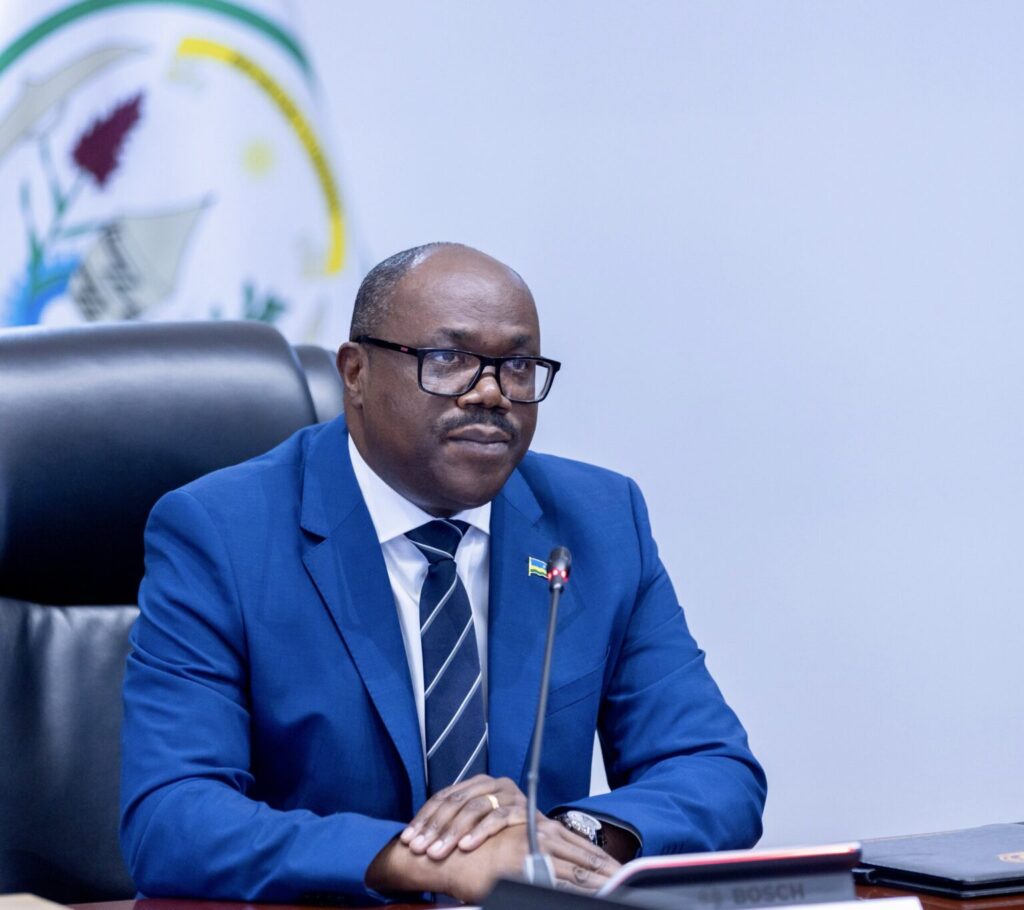
Prime Minister Dr. Justin Nsengiyumva has outlined three key pillars that have underpinned Rwanda’s post-genocide recovery and transformation, saying strong leadership, long-term planning, and citizen-centered governance have driven the country’s development journey.
He made the remarks on Monday while addressing the opening of a governance conference in Lesotho, a forum that brought together leaders and experts to exchange experiences on leadership, governance, and sustainable development. The conference was officially opened by Lesotho Prime Minister Samuel Matekane.
Nsengiyumva said Rwanda’s recovery after the 1994 Genocide against the Tutsi was guided by deliberate choices about the country’s future, under the leadership vision of President Paul Kagame.
He noted that following the collapse of state institutions and the severe social and economic consequences of the genocide, Rwanda prioritized rebuilding institutions, restoring social cohesion, and defining a clear national direction.
“The most important thing we managed to control was the choices we made about the future of our country,” he said.
He highlighted three key lessons from Rwanda’s experience.
The first is long-term national planning. Nsengiyumva pointed to Vision 2020 as a foundational framework that aligned institutions around shared goals and promoted a culture of long-term thinking, now carried forward under Vision 2050.
The second is transforming limited resources into development opportunities. He said that despite being a landlocked country with few natural resources, Rwanda invested strategically in security, governance, tourism, infrastructure, and digital transformation to position itself as an attractive destination for investment and services.
He cited digital platforms such as Irembo as key innovations that have improved access to public services and enhanced efficiency in service delivery.
Nsengiyumva also noted Rwanda’s progress in strengthening domestic resource mobilization, reducing reliance on external aid through improved financial management and stronger institutions.
He emphasized that accountability and anti-corruption measures remain central to sustaining progress, adding that public trust is built on justice, integrity, and the principle that no one is above the law.
“The President has consistently demonstrated that no one is above the law. Public trust in institutions is built on justice, integrity, and accountability,” he said.
The third pillar, he added, is placing citizens at the center of development. Rwanda’s recovery, he said, required rebuilding trust between leaders and citizens and ensuring active citizen participation in governance.
He pointed to platforms such as Umushyikirano, which enables citizens to engage directly with leaders, and Imihigo performance contracts, which strengthen accountability in delivering development targets.
Nsengiyumva also reaffirmed the growing cooperation between Rwanda and Lesotho, highlighting ongoing exchanges of knowledge and leadership experience between the two countries.
“We highly value the exchange of ideas and expertise between our two countries over the years, including participation in leadership retreats in Lesotho, as they reflect our shared commitment to learning and experience-sharing,” he said.
He added that Rwanda remains committed to strengthening bilateral cooperation with Lesotho to advance development outcomes and improve the wellbeing of citizens in both countries, particularly through governance and institutional partnerships.