Rwanda’s courts resolved nearly 20,000 cases through restorative justice in the 2025/26 judicial year, a 32.4 percent increase that the Judiciary says reflects growing efforts to settle eligible disputes more quickly.
A total of 19,888 cases were resolved through restorative justice, up from 15,012 cases in the previous judicial year, according to Supreme Court President Domitille Mukantaganzwa.
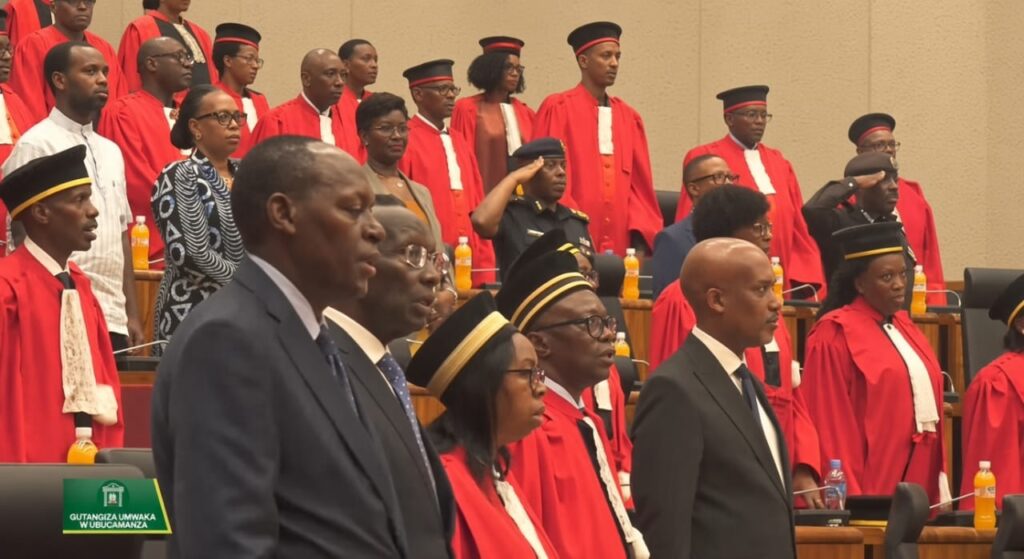
The increase of 4,876 cases was announced Friday as Rwanda’s Judiciary launched the 2026/27 judicial year.
Mukantaganzwa said the Judiciary had deliberately stepped up efforts to encourage litigants to use restorative justice whenever their disputes could be handled through the approach.
The mechanism allows parties in eligible cases to seek solutions through reconciliation and agreement rather than relying entirely on conventional court proceedings.
The growing number of cases resolved through the approach is significant for a judicial system seeking to reduce case backlogs and shorten the time people spend waiting for their disputes to be heard.
Mukantaganzwa said the increase was not only a reflection of the work of judges and court staff, but also of measures adopted by the Judiciary to improve the speed and quality of justice.
“The figures of cases decided do not only show the good work done by judges and other court staff and their commitment, but also demonstrate how the Judiciary links that work to its objective of delivering quality and timely justice,” she said.
The Judiciary has identified faster case resolution, reducing pending cases and shortening waiting periods before hearings as some of its key priorities.
The push for restorative justice forms part of those efforts, particularly for disputes that can be resolved without a full judicial process.
By encouraging parties to reach settlements where appropriate, the approach can help reduce the number of cases requiring lengthy proceedings while allowing courts to concentrate their resources on disputes that require formal adjudication.
The Judiciary said improving efficiency would remain a priority during the 2026/27 judicial year, alongside maintaining the quality of decisions.
For litigants, the increased use of restorative justice could mean faster resolution of eligible disputes, while for the courts, it offers another tool to address congestion and case backlogs.
The 32.4 percent increase recorded in the latest judicial year signals a growing role for alternative dispute resolution in Rwanda’s efforts to deliver justice more efficiently.