Rwanda has called on the United Nations (UN) and its member states to step up efforts to combat hatred, genocide denial and impunity, stressing that commemorating genocide victims must go hand in hand with concrete measures to prevent such atrocities from happening again.
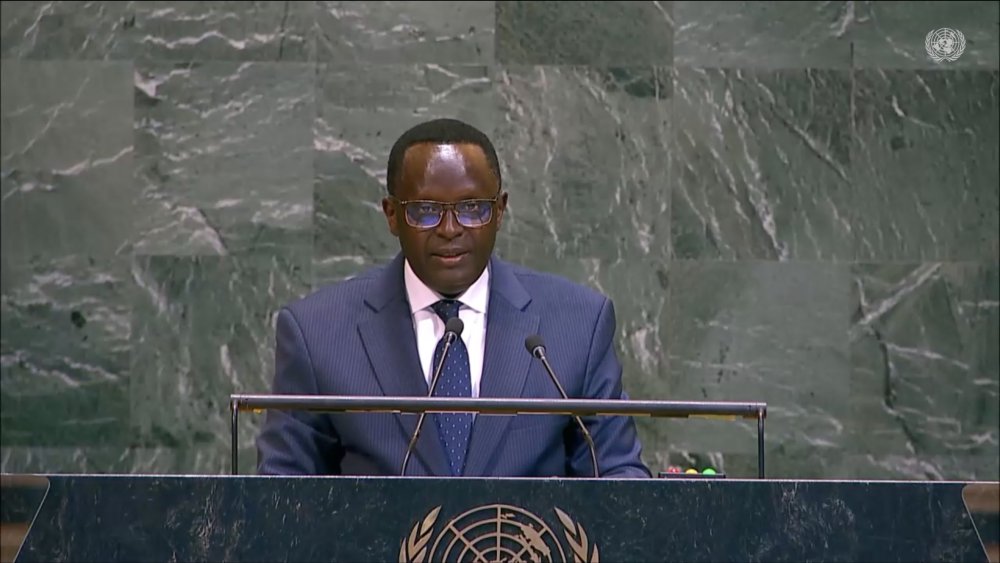
The call was made by Rwanda’s Ambassador to the UN, Martin Ngoga, while addressing the UN General Assembly in New York on October 12, 2026.
In his address, Ngoga discussed genocide remembrance, Africa’s sustainable development and the foundations for lasting peace on the continent.
He commended the UN for its role in commemorating genocide victims and educating people about genocide history, but stressed the need to ensure that lessons from the past translate into practical action rather than remain confined to reports.
Ngoga noted that the 1994 Genocide against the Tutsi, which claimed more than one million lives, was preceded by discrimination, the dehumanisation of people and the spread of hate speech.
He said that while radio was used to spread hatred in 1994, social media and digital technologies today can amplify similar messages and reach large audiences within a short time.
The ambassador criticised the fact that some people who spread hatred and division are given political platforms instead of being held accountable.
“We cannot credibly claim to be preventing genocide while allowing hatred to be used as a political tool,” he said.
He called for international genocide commemoration days, including those dedicated to the Genocide against the Tutsi, the Holocaust and the Srebrenica genocide, to deliver tangible results through education, changing attitudes and preventing genocide crimes.
Ngoga told the General Assembly that, more than 32 years after the Genocide against the Tutsi was stopped, Rwanda was still seeking more than 1,000 people suspected of having participated in the atrocities.
He thanked countries that have helped bring genocide perpetrators and those responsible for other crimes against humanity to justice. He also called for continued judicial cooperation, stronger condemnation of genocide denial and greater protection for survivors.
On Africa’s development, Ngoga said the continent’s challenge was not simply a lack of resources, but also its limited capacity to process, retain and invest those resources to drive economic growth.
He cited a report by the UN Secretary-General estimating that Africa’s unrealised economic opportunities and losses amount to $2.1 trillion. In 2024, the continent received $97 billion in foreign direct investment and $42 billion in official development assistance.
He added that natural resources accounted for an average of 11.8 per cent of Africa’s gross domestic product between 2000 and 2021, compared with a global average of 2.8 per cent.
Despite this resource wealth, Ngoga said Africa continued to face poverty and insecurity. He stressed the need for good governance, transparent resource management and fair distribution of the benefits of development among citizens.