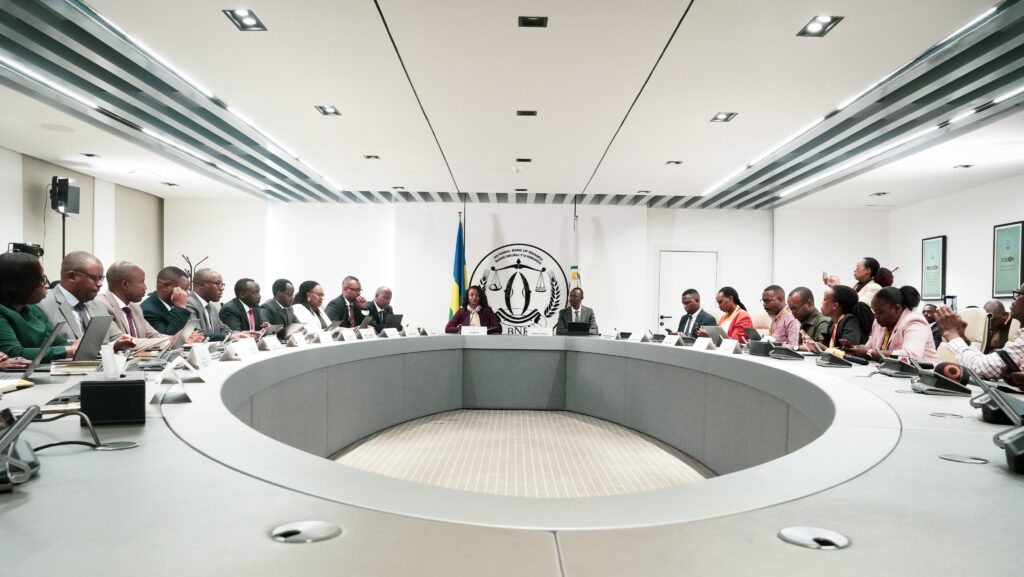
The National Bank of Rwanda has increased its key policy interest rate by 1 percentage point to 8.25%, up from 7.25%, in an effort to contain rising inflation, which has been partly driven by the impact of the ongoing conflict in the Middle East on global markets.
The decision was announced on Thursday, May 21, 2026, during a press briefing by the central bank.
The Monetary Policy Committee said the move followed a detailed assessment of the country’s economic conditions, noting that inflation reached 13% in April and is projected to average 13.9% by the end of 2026 before declining to 7.4% in 2027.
Central Bank Governor Soraya Hakuziyaremye said the tightening of monetary policy was intended to bring inflation back to the medium-term target of 5%, stabilize prices, and protect household purchasing power.
She said, “We remain committed to making data-driven decisions to ensure inflation returns to the 5% target in the medium term.”
Hakuziyaremye noted that the conflict in the Middle East continues to disrupt global economic stability, with effects expected to intensify depending on its duration and scale.
She added that Rwanda is also likely to experience the impact through higher prices of goods and services, largely driven by disruptions in international trade and supply chains.
The Monetary Policy Committee indicated that global economic growth is expected to slow to 3.1% in 2026, before a modest recovery in 2027, while global inflation is projected to ease gradually from 4.4% in 2026 to 3.7% in 2027.
In Sub-Saharan Africa, inflation remains elevated but is projected to decline from 12.5% in 2025 to 8.8% in 2026 and 2027. However, the pace of disinflation is slower than previously expected, largely due to continued depreciation of several regional currencies against the US dollar and other major trading currencies.
On the domestic financial sector, the central bank reported that total financial system assets in Rwanda reached 16.5 trillion Rwandan francs in the first quarter of 2026, representing a 22% increase.
The banking sector grew by 20%, microfinance institutions by 26%, pension funds by 35%, and the insurance sector by 10%.
Credit to the economy also expanded significantly, rising by 27.7%, driven mainly by construction at 18.7%, trade at 15.7%, and household lending at 13.1%.
Agricultural lending continued to grow, accounting for 3.9% of total credit in the country.